Where Should You Host Your Application? Exploring On-Prem, Hosted, Cloud-Native, and Kubernetes Options
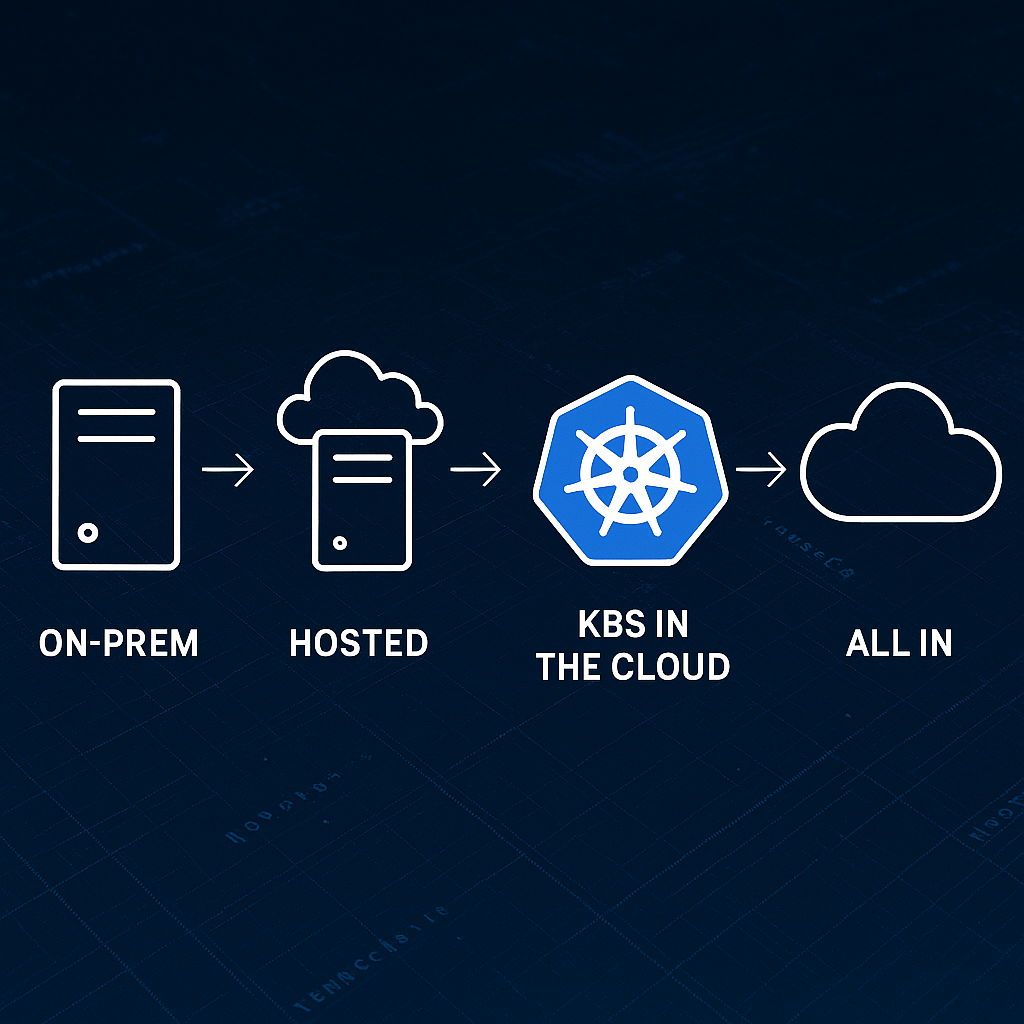
As application developers and infrastructure teams face a growing array of deployment choices, deciding where to host your software has never been more complex. Whether you’re delivering a SaaS product, a corporate website, or a digital publication, choosing the right hosting model is critical for performance, security, cost, and long-term maintainability.
This article outlines four major hosting paradigms—On-Premise, Hosted, Kubernetes in the Cloud, and All-In Cloud-Native—and provides insight into the pros and cons of each. This isn’t a comprehensive technical comparison, but rather a high-level overview to help teams begin the decision-making process.
1. On-Premise
Though cloud computing dominates today’s discourse, on-premise hosting still offers significant advantages—especially in industries where control, security, and cost predictability are paramount.
Pros:
- Complete control over hardware and software. You decide when to update, how to secure systems, and what technologies to use—free from vendor constraints.
- Long-term cost savings. Enterprise-grade hardware can be kept running well beyond warranty with the right maintenance, driving down total cost of ownership.
- Freedom from vendor lock-in. Cloud-native stacks often rely on provider-specific APIs and services, making it hard to migrate. On-prem gives you the ultimate in portability.
Cons:
- Operational complexity. You’ll need space, power, cooling, redundancy, and staff expertise to manage your own data centers.
- Scalability and redundancy. Achieving geographic redundancy or elastic scalability is much harder.
- CapEx model. Significant up-front hardware and facilities investment is often required.
Notably, companies like 37signals (Basecamp) and Ahrefs have publicly moved from the cloud back to on-prem due to excessive costs source: TechCrunch, source: Ahrefs blog.
2. Hosted Infrastructure (Non-Hyperscaler Providers)
Hosted infrastructure is a middle ground. You rent physical or virtual machines in someone else’s data center—but without the ecosystem lock-in of AWS, Azure, or GCP.
Examples:
Pros:
- Hardware control without facilities overhead. You deploy what you want on generic hardware.
- Vendor-agnostic. Easy to move providers or multi-home across regions.
- Lower cost. Many providers offer more predictable pricing and fewer surprise fees than hyperscalers.
Cons:
- Limited enterprise services. You won’t get managed Kubernetes, CDN, analytics, or proprietary tools.
- Less geographic coverage than the big cloud providers.
3. Kubernetes in the Cloud (Bring Your Own Cluster or Hosted Kubernetes)
Kubernetes (K8s) has become the lingua franca of modern infrastructure orchestration. Whether self-hosted on VMs or via cloud-managed services like EKS (AWS), AKS (Azure), or GKE (Google Cloud), Kubernetes can provide a solid foundation for scaling software in a cloud-agnostic way.
Beginner? Start with the CNCF’s introduction to Kubernetes
Pros of Self-Managed Kubernetes:
- Cloud-neutral and portable. Deploy anywhere: on-prem, hosted, or multi-cloud.
- IaC friendly. Use Terraform or OpenTofu to automate cluster provisioning and deployments.
- Customizable. Total control over versions, plugins, and architecture.
Cons:
- Operational complexity. Requires Kubernetes administrators and tooling.
- Upgrades and scaling. You own lifecycle management.
Pros of Managed Kubernetes (EKS/AKS/GKE):
- Simplified setup. Cloud handles most of the heavy lifting.
- Faster onboarding. Your team can deploy faster without managing control planes.
Cons:
- Some vendor lock-in. It’s not full “bare metal” freedom.
- Limited portability. Running on-prem becomes harder.
- Expertise still required. You still need DevOps and Kubernetes knowledge.
4. All-In Cloud Native (Hyperscaler Services)
The full-cloud-native path means building your software using proprietary cloud services and serverless infrastructure.
Examples include:
- AWS Lambda, Azure Functions, Google Cloud Run (serverless compute)
- Azure App Services for .NET applications
- Google Firebase for mobile/web backends
- AWS S3, Azure Blob Storage (storage)
- Azure Front Door, Cloudflare, AWS CloudFront (CDN/networking)
Pros:
- Rapid development. Ideal for startups and fast-moving teams.
- Cost-effective early on. You only pay for what you use.
- High scalability and global reach baked in.
Cons:
- Heavy vendor lock-in. Migrating to another provider often requires a full rewrite.
- Opaque pricing. Many teams encounter billing surprises as they scale.
- Specialized knowledge needed. Staff must be well-versed in each cloud’s specific tools, APIs, and limitations.
🧾 Summary Table: Pros & Cons
Model | Pros | Cons |
|---|---|---|
On-Premise | Full control, no lock-in, long-term cost savings | High complexity, infrastructure cost, staffing needs |
Hosted | Control w/out facilities, vendor-agnostic, affordable | Fewer managed services, regional limitations |
K8s in the Cloud | Cloud-neutral, scalable, IaC support | High complexity (self-managed), vendor tie-in (managed) |
All-In Cloud | Speed, scalability, rapid development | Lock-in, complex billing, provider-specific expertise required |
Final Thoughts
There is no one-size-fits-all answer. Your hosting strategy should reflect your team’s strengths, your product’s stage, compliance requirements, and your long-term growth goals.
If you’re just starting out and need to build fast, cloud-native services may be the right fit. But if long-term control, cost, and agility are top concerns, adopting a Kubernetes-based or hybrid infrastructure may pay off in the long run.
Have thoughts, comments, or experiences to share? Let’s start a conversation on LinkedIn or by creating an account and posting below.
If you found this useful, please spread the word on LinkedIn, FaceBook and other social media.
My LinkedIn profile is in the menu bar at the top of the site.
Have an awesome day, and go ship some code!
Sarg3.